
Why We Use Shape Up Instead of Scrum (And Why You Should Care)
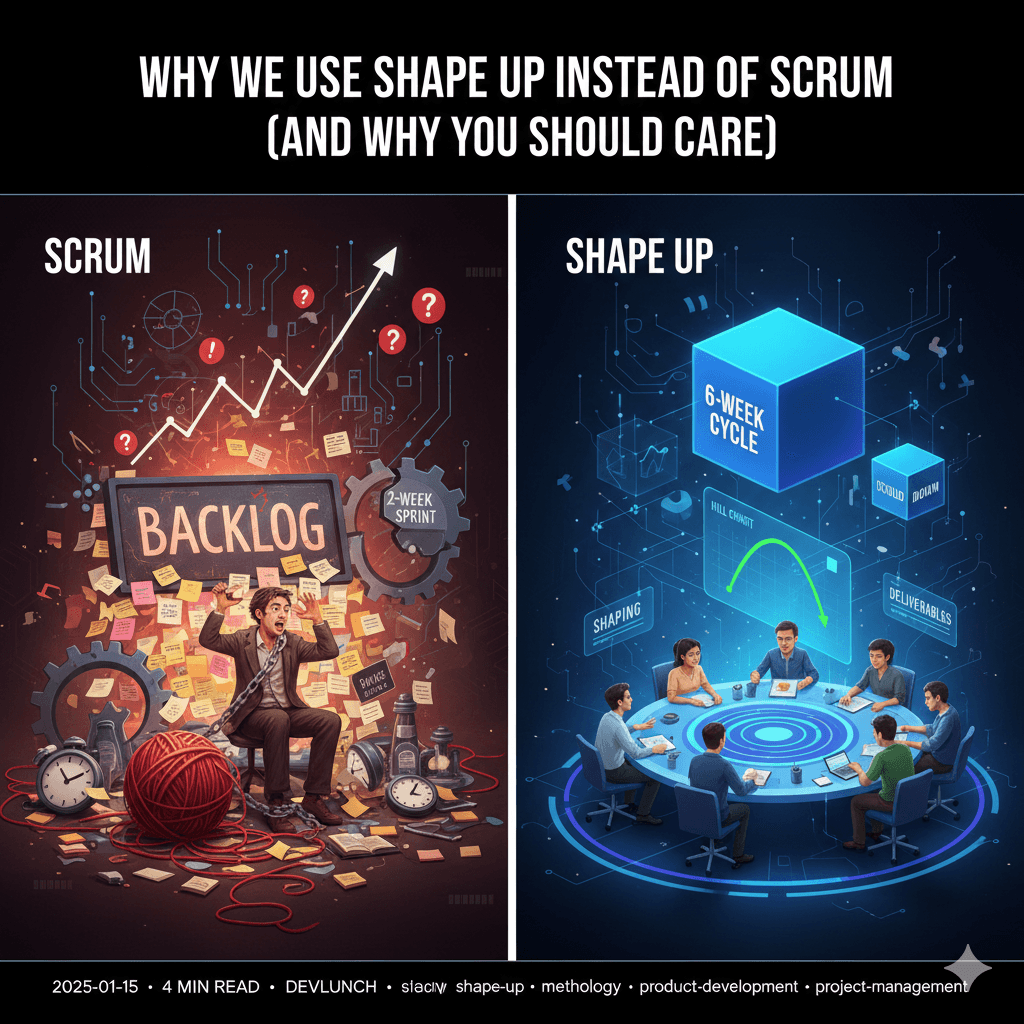
If you have ever worked with a software development team, you probably know the drill: two-week sprints, daily standups, a backlog that never stops growing, and the nagging feeling that your project is always 80% done. That was our reality too -- until we discovered Shape Up.
At DevLunch, we adopted Shape Up as our core development methodology, and it changed everything about how we deliver software. Here is why.
What Is Shape Up?
Shape Up is a product development methodology created by Basecamp (the company behind the popular project management tool). Instead of breaking work into tiny user stories and estimating them with story points, Shape Up focuses on shaping the work upfront and then building it in fixed 6-week cycles.
The core idea is simple: fixed time, variable scope. You decide how much time a project is worth (the "appetite"), shape a solution that fits within that constraint, and then let the team build it autonomously.
The Problem with Traditional Agile
We are not against Agile principles -- they are solid. But the way most teams practice Scrum has some real pain points:
- The never-ending backlog: Tickets pile up, priorities shift constantly, and the team loses sight of the big picture.
- Two-week sprints feel rushed: There is barely enough time to get into flow before the sprint review arrives.
- Estimation theater: Story points become a game. Teams spend hours debating whether something is a 3 or a 5.
- No breathing room: Sprint after sprint with no cooldown leads to burnout and technical debt.
How Shape Up Solves This
1. Shaping Before Building
Before any code is written, we invest time in shaping the solution. This means defining the problem clearly, setting boundaries on the scope, and sketching the approach at the right level of abstraction -- not pixel-perfect wireframes, but not vague ideas either. This de-risks the project before the clock starts.
2. Six-Week Cycles
Six weeks is long enough to build something meaningful but short enough to maintain urgency. Our teams have the time to think deeply, iterate, and ship polished work -- not just a "minimum viable" slice.
3. The Betting Table
Instead of a growing backlog, we hold a betting table meeting before each cycle. Stakeholders pitch shaped work, and we decide what to bet on. If a pitch does not make the cut, it is not added to a backlog -- it can come back next cycle if it still matters.
4. Cooldown Periods
After every 6-week cycle, we take a 2-week cooldown. This is time for fixing bugs, exploring new ideas, learning, and preparing for the next cycle. It prevents burnout and keeps the team sharp.
5. Hill Charts Over Status Updates
Instead of asking "what percentage done is this?", we use hill charts to track progress. Work moves from "figuring things out" (uphill) to "making it happen" (downhill). This gives everyone a real sense of where things stand without micromanaging.
What This Means for Our Clients
If you are hiring DevLunch for your project, Shape Up gives you:
- Predictable timelines: Every cycle has a hard deadline. You know when to expect working software.
- Meaningful deliverables: Each cycle ships something real -- not a half-built feature that needs three more sprints.
- Less wasted money: By shaping work before building, we avoid building the wrong thing.
- Transparency: You can see real progress through hill charts and regular check-ins without attending daily standups.
Is Shape Up Right for Every Project?
Shape Up works best for product development and custom software projects where there is room to shape scope. For strict fixed-spec projects (like rebuilding an existing system 1:1), a more traditional approach might fit better. But for most of the work we do -- building new web applications, automating business processes, and developing custom platforms -- Shape Up is the best way we have found to deliver affordable React development and Ruby on Rails nearshore services that actually solve real problems.
Ready to Try a Better Process?
If you are tired of endless sprints and growing backlogs, we would love to show you what focused, shaped work looks like. Get in touch and let us shape your next project together.
Related Posts

Why Custom React Apps Beat Template Solutions (And When Templates Are Fine)
Thinking about using a template for your next project? Learn when custom React development is worth the investment and when a template gets the job done.
Read more→
Nearshore Software Development from the Dominican Republic: Why It Works
Discover why nearshore software development from the Dominican Republic offers the best balance of cost, quality, timezone alignment, and communication.
Read more→