How do you accept card payments online in the Dominican Republic?
To accept credit and debit cards online in the Dominican Republic, a business needs a merchant account with a local acquirer such as AZUL, a payment gateway connected to its website or app, and an integration that tells the store whether each payment was approved.
With AZUL, the usual path is the AZUL Payment Page: a hosted page where the customer enters the card. The integration is built and tested with test credentials first, then switched to production credentials when it is ready to take real payments.
How does the AZUL Payment Page work?
At checkout, the customer is sent from the store to AZUL's secure payment page, enters the card there and is sent back to the store with the result. The store never receives or stores card numbers, which helps keep it out of PCI scope.
The payment has to be confirmed before the order is marked paid. Azul Payments for WooCommerce takes care of that, so the store only counts orders that were really paid.
How do you integrate Azul with WooCommerce?
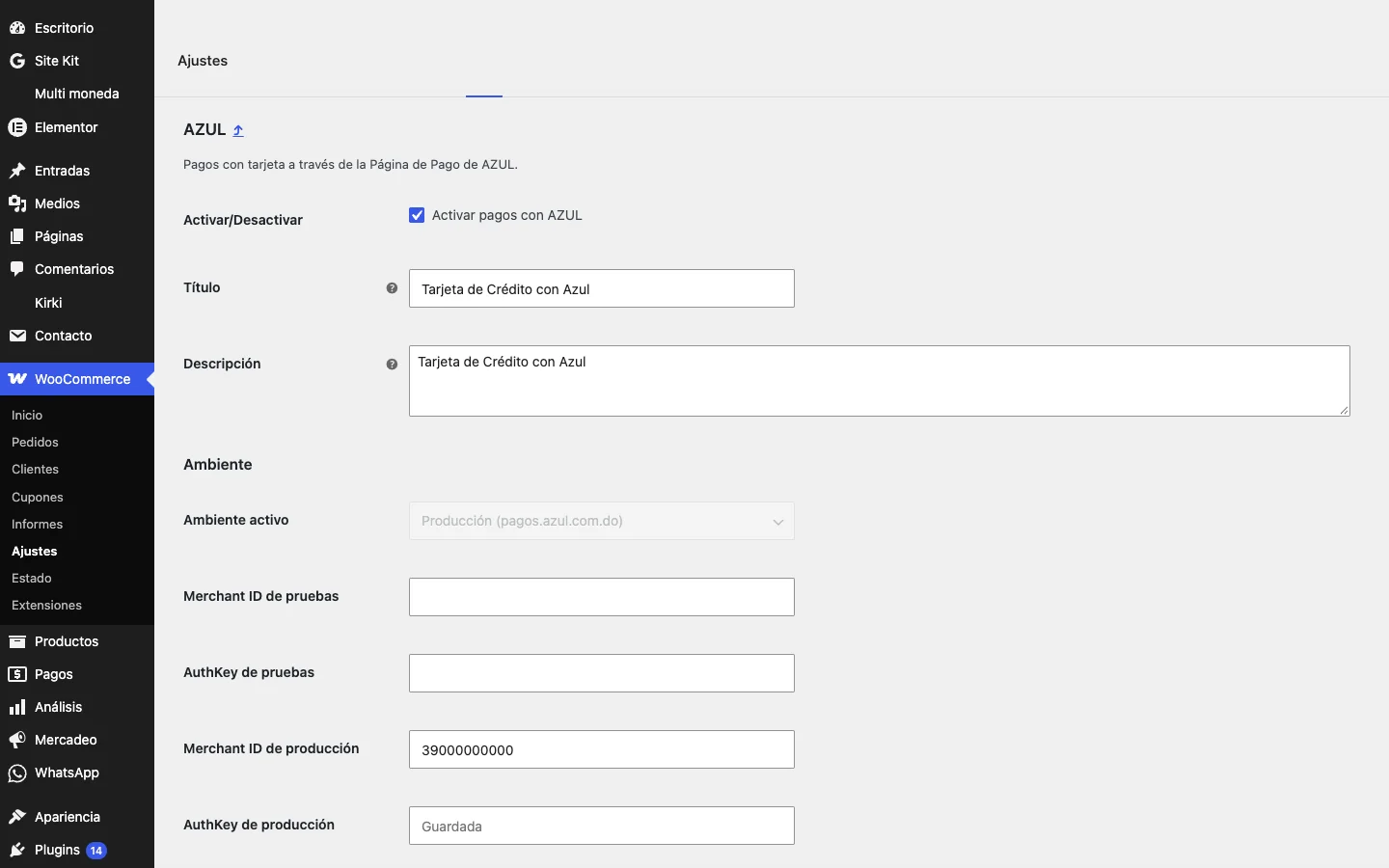
Azul Payments for WooCommerce is DevLunch's own plugin for WooCommerce stores in the Dominican Republic, now in version 2.0. It adds AZUL as a payment method at checkout and supports WooCommerce HPOS (High-Performance Order Storage), the Cart and Checkout blocks and a Spanish translation.
Test and production are kept separate, so test orders never charge real cards. The plugin also supports 3D Secure.
Can a store priced in US dollars charge with Azul?
An AZUL merchant account settles in one currency, usually Dominican pesos (DOP). A store that shows prices in US dollars has to convert the order total before sending it to AZUL.
Azul Payments for WooCommerce converts the total using the rate from the store's currency switcher, or a fallback exchange rate set in the plugin. ITBIS is sent to AZUL from the order totals.
Can Azul be integrated into a Rails app or custom software?
Yes. Azul is not limited to WooCommerce. DevLunch integrates the AZUL Payment Page into Ruby on Rails applications and other custom software, with the same verification of every response before an order, invoice or subscription is marked paid.
Other gateways are covered on the API development and integrations page: CardNet for local card payments and Stripe for card payments and subscriptions in US dollars.
How much does an Azul integration cost?
For WooCommerce stores, the starting point is the Azul Payments for WooCommerce plugin. Contact DevLunch to get it set up on your store.
For custom software, DevLunch does not bill by the hour. An Azul integration is priced as part of a fixed 6-week cycle using Shape Up, with price and deadline set before development starts and working software in production at the end of the cycle.