What does WordPress and WooCommerce development include?
WordPress development covers custom themes, custom plugins, content types, forms, multilingual setup, performance and the admin screens editors use. WooCommerce development adds the store: product catalog, cart, checkout, payment gateways, taxes, shipping rules, order emails and integrations with the systems behind the store.
Most WordPress projects are not built from scratch. They extend an existing site or store with a plugin that adds a missing feature, connects an external system or replaces several third-party plugins with one piece of custom code.
How do you build a custom WordPress plugin?
A custom WordPress plugin packages a feature as its own code: settings screens, hooks into WordPress and WooCommerce, database tables when needed, scheduled tasks and a translation file. It is installed and updated like any other plugin, and it keeps your business rules out of the theme.
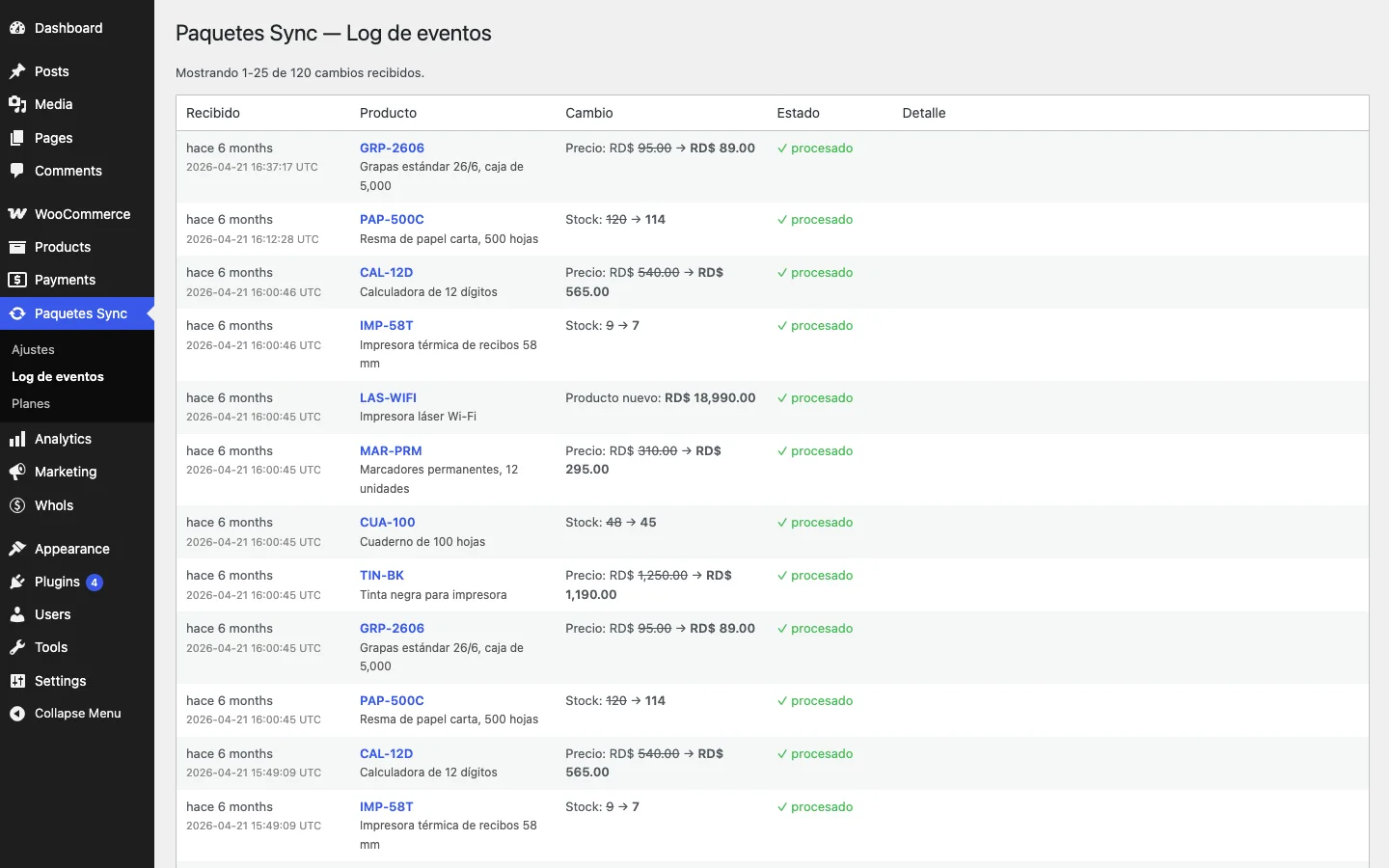
DevLunch builds its own WooCommerce plugins to the same standard it uses for client work. Azul Payments for WooCommerce supports HPOS (High-Performance Order Storage), the Cart and Checkout blocks and a Spanish translation. Paquetes Sync keeps a WooCommerce catalog in sync with an inventory system in real time and keeps a log of every change.
How do you integrate WooCommerce with an inventory or invoicing system?
A WooCommerce integration keeps products, stock and prices in the store aligned with the system where the business manages them. The reliable way is real time: each change reaches the store as it happens, instead of waiting for a scheduled import.
Paquetes Sync is the official WooCommerce plugin of Paquetes.do, a sales, inventory and NCF invoicing system for Dominican small businesses built by DevLunch. It syncs catalog, stock and prices in real time, with four sync modes (full, price and stock, stock only, prices only), matching by Paquetes ID or SKU, new products as drafts, wholesale prices for the Whols plugin, and a compatibility check for DOP currency, 18% ITBIS and prices with tax.
How do you accept Azul card payments on WooCommerce?
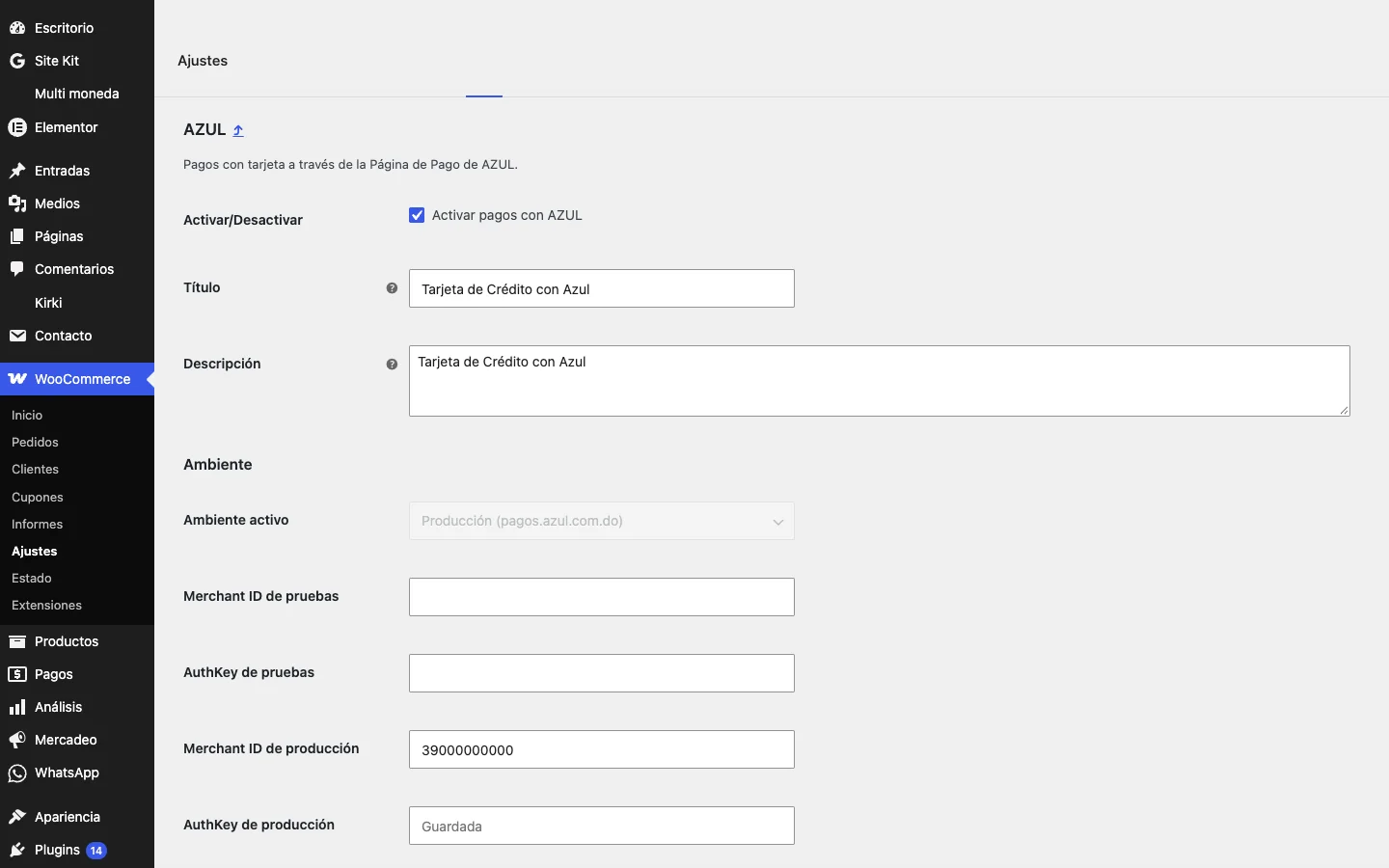
WooCommerce stores in the Dominican Republic take credit and debit cards through a payment gateway plugin. Azul Payments for WooCommerce, built by DevLunch, sends the customer to the AZUL Payment Page to enter the card and brings them back to the store, so the store never handles card numbers.
Setup, currency conversion, 3D Secure and test and production credentials are covered on the Azul payment gateway page.
Should you use WordPress or a custom web application?
WordPress and WooCommerce work well for content sites, marketing sites and online stores with a standard checkout, especially when the team already edits content in WordPress. A custom theme and a few custom plugins usually cover what templates do not.
When the store depends on customer-specific prices, quotes, credit terms or a back office built around your operation, a custom ecommerce platform or web application is often the better fit. DevLunch builds both and recommends one before any code is written.
How much does WordPress and WooCommerce development cost in the Dominican Republic?
For a site or store in the Dominican Republic, the cost depends on the number of custom features, the integrations, the state of the existing site and the data that has to be migrated.
DevLunch does not bill by the hour. WordPress and WooCommerce work is priced per fixed 6-week cycle using Shape Up. Before each cycle, the problem, the appetite and a solution outline are defined with you, then price and deadline are fixed. Each cycle ends with working software in production.