What is SaaS development?
SaaS (software as a service) is software that customers use online and pay for by subscription. SaaS development covers the product features plus the parts every SaaS needs: sign-up and login, teams and roles, plans and subscription billing, transactional emails, an admin panel, background jobs and an API.
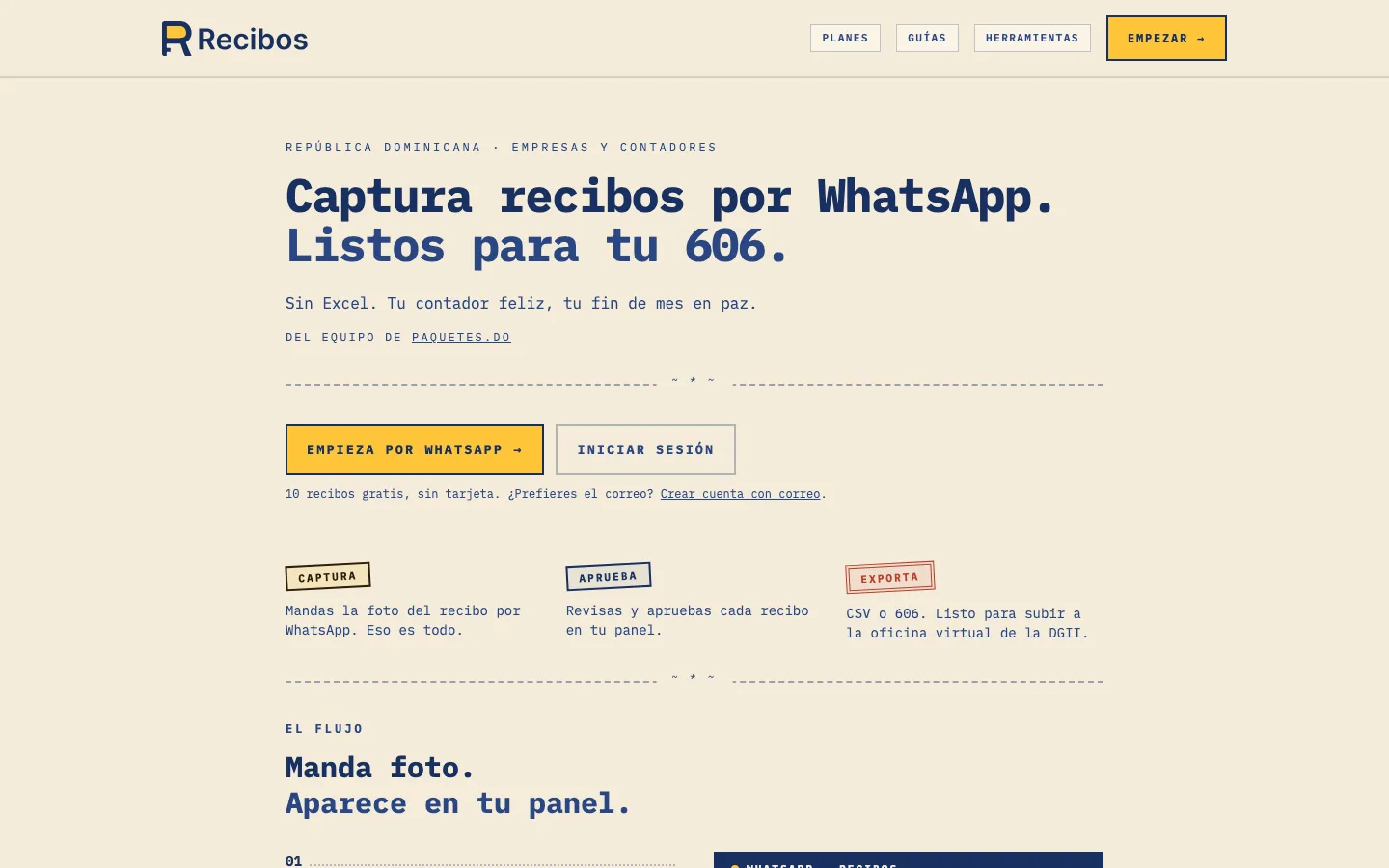
A SaaS can be a product sold to many businesses, or a platform a company offers to its own customers. Recibos.do, built by DevLunch, is a SaaS for Dominican businesses and accounting firms: receipts are sent over WhatsApp, reviewed in a panel and exported to the DGII Formato 606, CSV or QuickBooks Desktop.
How much does it cost to build a SaaS in the Dominican Republic?
For a SaaS built in the Dominican Republic, the cost depends on what the first version must do: user roles, core features, integrations, billing rules and reports. A focused MVP costs much less than a full product, which is why scope is defined before price.
DevLunch prices SaaS development per fixed 6-week cycle using Shape Up. Before each cycle, the problem, the appetite (how much the work is worth to you) and a solution outline are defined with you, then price and deadline are fixed. There is no hourly billing, and each cycle ends with working software in production.
How do you build an MVP for a SaaS?
An MVP (minimum viable product) is the smallest version of a product that real customers can use and pay for. Building one starts with shaping: the one problem the product solves, the users who have it, and what is left out of the first version.
The first 6-week cycle puts that version in production, with sign-up, the core workflow and billing if it is needed from day one. A 2-week cooldown follows, then the next cycle is shaped based on what users actually do in the product.
What is the best tech stack for a SaaS?
DevLunch builds most SaaS products on Ruby on Rails with Hotwire and PostgreSQL. Rails gives a small team authentication, multi-tenant accounts, mailers, background jobs (Sidekiq or Solid Queue) and admin screens with less code, so more of each cycle goes into product features.
React, Next.js and TypeScript are used for highly interactive interfaces and for public pages that need server rendering for SEO. Stripe handles subscription billing, plans, trials and invoices. When the SaaS needs a mobile app, it is built with React Native and Expo on the same API.
What happens after a SaaS launches?
After launch, work continues cycle by cycle: new features, integrations, pricing changes and performance work, each shaped and priced before it starts. Maintenance and support cover bug fixes and dependency upgrades between cycles.
The repository belongs to you from day one. If you hire an in-house team later, they take over a codebase you already own, with the full history of every change. Dedicated developers can also keep working alongside your team.